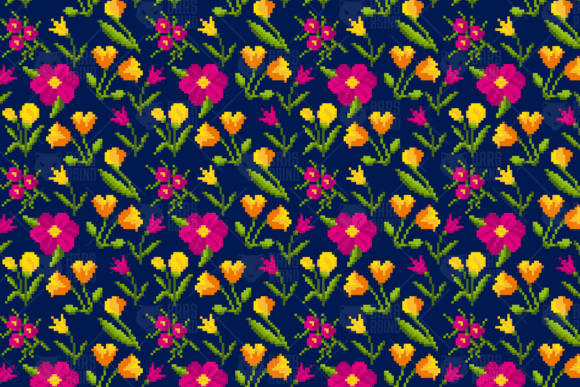
Pixel Flora Seamless Pattern: Bringing Retro Garden Charm to Modern Design
There is something quietly satisfying about a pattern that feels both familiar and fresh. The Pixel Flora Seamless Pattern captures that exact feeling—a vibrant field of retro flowers in yellow, orange, and magenta, all set against a deep navy blue background. It is pixel art, but not the kind you might remember from old arcade cabinets. This is a thoughtful, detailed mosaic that blends 8-bit and 16-bit nostalgia with botanical warmth. Whether you are designing a game interface, building a brand identity, or just sprucing up a social media story, this pattern offers a distinct visual voice.
What Exactly Is the Pixel Flora Seamless Pattern?
At its core, this is a repeating vector pattern built from pixel-inspired floral elements. The flowers are stylized in a retro pixel art aesthetic, reminiscent of early digital games and Y2K design trends. The color palette leans into warm, energetic tones—yellow, orange, magenta—balanced by a deep navy backdrop that keeps everything grounded. Because it is a seamless pattern, it tiles endlessly without visible breaks, making it practical for wallpapers, fabrics, UI backgrounds, and more. The package includes AI, EPS, SVG, PNG (with transparent background), and JPG files, so you can work across different tools without compatibility headaches.
Where This Pattern Shines in Real Projects
The real value of any design asset is how easily it fits into actual work. The Pixel Flora Seamless Pattern is not just a pretty image—it is a tool that solves specific visual problems. Here are some of the most practical ways people are using it right now.
Digital Wallpaper and Screen Backgrounds
Whether you are designing a phone wallpaper, a desktop background, or a tablet lock screen, the pattern's deep navy base keeps it from being overwhelming. The bright floral elements pop without straining the eyes. For creators who make wallpaper packs or themed digital products, this pattern offers a nostalgic twist that stands out among generic abstract backgrounds. It also works well for video call backgrounds—think Zoom or Teams—where you want something playful but not distracting.
Retro Game and Indie Game Assets
If you are building an indie game with a pixel art style, this pattern can serve multiple roles. Use it as a background for a garden level, a pattern on a character's dress, or a loading screen texture. The 8-bit and 16-bit inspired design fits naturally into retro-themed games without feeling like a cheap copy of classic titles. Small studios and solo developers often struggle to find affordable, cohesive assets that don't look generic. This pattern gives you a ready-made element that feels intentional and polished.
Social Media Stories, Posts, and Banners
Social media managers and content creators need visuals that grab attention quickly. The Pixel Flora Seamless Pattern works well as a background for Instagram stories, quote cards, or promotional banners. Its pixel art style taps into the ongoing nostalgia for Y2K and early internet aesthetics, which resonates with audiences aged 20 to 40. You can overlay text, logos, or graphics on top of the pattern, and the navy background ensures readability. For brands targeting creative or tech-savvy audiences, this pattern adds personality without looking childish.
Website and UI Backgrounds
Web designers often need backgrounds that add texture without overwhelming the content. This pattern can serve as a hero section backdrop, a repeating tile for a blog sidebar, or a subtle element behind navigation menus. Because it is vector based, you can scale it up or down without losing quality. The pixel art look also works well for landing pages that want to convey a retro, playful, or indie vibe. Just be mindful of contrast when placing text or buttons—the bright magenta and orange elements can compete with lighter foreground content.
Creative and Commercial Use Cases You Might Not Have Considered
Beyond the obvious digital applications, this pattern opens up opportunities in print and physical products. Small business owners and hobbyists are using it for fabric prints, embroidery ornaments, and handmade accessories. The repeating nature of the pattern makes it ideal for tote bags, pillows, or even custom phone cases. If you run a print-on-demand shop, this pattern could be a strong addition to your product line, especially if you target customers who love retro aesthetics or gardening themes.
Educators and workshop facilitators have also found value here. If you teach design, pixel art, or digital illustration, the pattern can serve as a teaching example for discussing color theory, tiling, and nostalgia in design. It is concrete enough to analyze but flexible enough to inspire student projects. Similarly, bloggers covering design trends, retro culture, or creative tools can use the pattern as a visual example in their posts.
What to Consider Before Using This Pattern
As practical as this asset is, a few things are worth keeping in mind before you drop it into your project. First, think about context. The pixel art floral style is strongly associated with nostalgia and retro gaming. If your brand or project leans toward sleek, modern minimalism, this pattern might feel out of place. It is best suited for audiences who appreciate playful, colorful, or vintage-inspired visuals.
Second, consider file format needs. The package includes AI, EPS, SVG, PNG, and JPG, which covers most use cases. But if you need a specific resolution for print, make sure the PNG or JPG is large enough for your output. Vector files (AI, EPS, SVG) are great for scaling, but you will need compatible software to edit them. The transparent background PNG is especially useful for overlaying the pattern on colored backgrounds or composite images.
Finally, think about repetition density. Seamless patterns look best when the repeat is not too obvious. This particular pattern has a detailed mosaic feel, so the repeat might be noticeable if used on very large surfaces like wallpaper murals. Test it at your intended scale before committing.
Who Benefits Most from This Pattern
Different users will get different value from the Pixel Flora Seamless Pattern. Freelance designers can add it to their asset library for quick client projects. Entrepreneurs building a brand around retro or Y2K aesthetics can use it as a signature visual element. Hobbyists working on personal projects—like a custom game or a digital scrapbook—will appreciate the nostalgic tone without the effort of creating pixel art from scratch. Even marketers running niche campaigns can leverage the pattern to evoke a specific era without relying on clichéd imagery.
The pattern also works for non-designers who need a quick, attractive background. If you are a small business owner posting on social media or a educator preparing slides, you do not need advanced design skills to use this asset effectively. Just drop it into your template or tool of choice, add your content, and you are done.
Practical Tips for Getting the Most Out of It
- Layer it with subtle textures. Adding a slight grain or noise overlay can soften the pixel edges and give the pattern a more tactile, printed feel.
- Pair it with simple typography. Because the pattern is busy, keep your text clean and sans-serif. White or pale yellow text tends to work best on the navy background.
- Use it as a focal point or an accent. On a website, consider using the pattern in a limited area—like a header bar or a card background—rather than covering the entire page.
- Test on different devices. The pixel aesthetic looks different on retina screens versus older displays. Preview your design on multiple devices to ensure the pattern reads as intended.
- Respect the color palette. The pattern already has strong colors. Avoid adding more bright hues nearby, or the composition may become chaotic.
Why This Pattern Matters for Today's Design Landscape
We are seeing a genuine resurgence of retro digital aesthetics—not just as a trend, but as a meaningful design language. People want visuals that feel warm, personal, and grounded in a shared cultural memory. The Pixel Flora Seamless Pattern taps into that desire without being a simple copy of past styles. It combines floral motifs (which are inherently organic and calming) with pixel art (which is structured and digital). That contrast is what makes it interesting. It feels like a garden seen through a screen, which is exactly the kind of hybrid that resonates in 2024 and beyond.
For creators and business owners who want to stand out without reinventing the wheel, this pattern offers a shortcut to a distinct look. It is not trying to be everything to everyone. It has a clear personality, and that is exactly why it works in so many contexts. Whether you are building a game, decorating a blog, or designing a product line, the Pixel Flora Seamless Pattern gives you a strong foundation to build on.
Final Thoughts Before You Download or Buy
Before you commit to using this pattern, take a moment to imagine it in your specific project. Picture how it will look as a phone wallpaper, a website background, or a fabric print. Consider the file formats you actually need and whether the color scheme aligns with your existing palette. The pattern is versatile, but it works best when you embrace its retro personality rather than trying to force it into a context that is too slick or corporate.
If you are looking for a design element that brings warmth, nostalgia, and a touch of pixel art charm, the Pixel Flora Seamless Pattern is worth adding to your toolkit. It is practical, well-crafted, and ready to use across digital and print projects alike. And in a world where so much design feels generic, a pattern with this much character is a genuine asset.