An Immersive Leap: How Virtual Reality Gaming Is Transforming the Way We Play
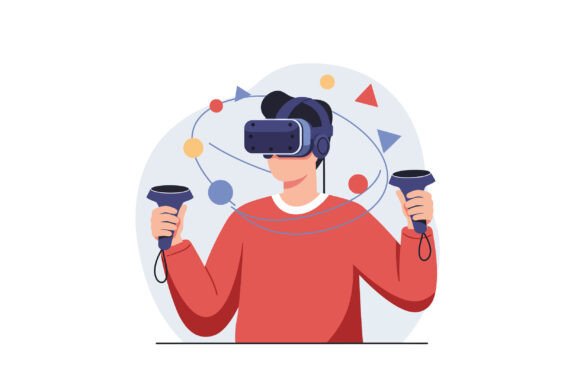
Picture a person standing in the middle of a room, a sleek headset covering their eyes, both hands gripping controllers that glow with soft blue lights. They turn their head slowly, then suddenly lunge to the side, swiping at something only they can see. To an observer, the scene looks like a dance with invisible partners. But inside the headset, that person is dodging a fire-breathing dragon, painting with streaks of light in zero gravity, or solving a puzzle on a distant alien world. This is virtual reality gaming — and it is unlike any form of play the world has ever known.
In just a few short years, virtual reality (VR) has moved from sci-fi fantasy to a thriving, accessible platform for gaming, creativity, education, and connection. With a headset and a pair of motion controllers, anyone can step into a fully immersive digital environment where the rules of physics — and reality — are entirely rewritten. This article explores what VR gaming really is, how it works, why it matters now more than ever, and how it is reshaping everything from leisure to learning.
What Is Virtual Reality Gaming? A Ground-Up Explanation
At its simplest, virtual reality gaming uses a head-mounted display (the headset) and handheld controllers to transport a player into a three-dimensional, computer-generated world. Unlike traditional gaming where you watch a screen, VR places you inside the experience. When you turn your head, the view rotates with you. When you reach out your hand, your virtual hand mirrors the motion. This creates a powerful sense of presence — the feeling that you are actually there.
The key components are:
- The VR Headset: A device worn on the head that covers the eyes, containing two high-resolution screens (one for each eye) and lenses that create a stereoscopic 3D effect. Sensors inside track head movement in real time, so looking left, right, up, or down changes your view instantly.
- Motion Controllers: Handheld devices tracked in 3D space. When you press a trigger, swing a sword, or toss an object, the controllers translate your physical motion into in-game action. They often include buttons, thumbsticks, and haptic feedback (vibrations) to make interactions feel real.
- Tracking Sensors (Inside-Out or External): Modern headsets use built-in cameras to track your position in the room (called inside-out tracking). Older or professional systems use external sensors placed around the room to capture your movements.
- Immersive Digital Elements: These are the virtual objects, environments, characters, and effects that populate the VR world. Because you are surrounded by them — not just viewing them on a flat screen — they feel tangible and alive.
When a person wearing a VR headset and holding controllers interacts with these digital elements, they are engaging in what is often called spatial computing. The game or application responds to where you are, what you are looking at, and what your hands are doing, making every moment feel responsive and personal.
Why VR Gaming Is Different: The Energetic, Embodied Experience
The most striking difference between VR gaming and traditional gaming is the level of physical involvement. In a typical console or PC game, you sit on a couch and press buttons. In VR gaming, you stand, crouch, dodge, reach, swing, and sometimes even run. The energetic mood of a VR session is palpable — players often laugh, shout, sweat, and move with surprising agility.
This physicality changes the nature of play itself. Puzzle games become spatial challenges you walk around and manipulate. Horror games become visceral experiences where you instinctively back away from shadows. Music games make you feel like a performer as you slash beats with glowing sabers. The result is a form of play that engages the body and mind simultaneously, creating a deeper emotional and cognitive connection to the content.
Examples That Bring the Experience to Life
- Rhythm Gaming: In a game like Beat Saber, you slice blocks flying toward you to the beat of energetic music. The motion is fast, requiring full arm swings and quick footwork. Players often describe it as a workout disguised as a game.
- Exploration and Adventure: In titles like Half-Life: Alyx, you physically crouch behind cover, reach around corners to peek, and toss objects with your own hands. The world feels dimensional because you move through it naturally.
- Creative Sandboxes: Applications like Tilt Brush or Painting VR let you paint in 3D space. You can walk around your creation, add layers of light and texture, and even collaborate with others in real time. The headset becomes a tool for artistic expression.
The Technology That Makes It Possible: Headsets and Controllers in Focus
Understanding the hardware helps demystify how VR gaming achieves its immersive magic. Modern VR headsets are surprisingly compact and lightweight, yet they pack an enormous amount of technology:
- Display and Optics: Each eye receives a separate image with slight parallax, tricking the brain into perceiving depth. High refresh rates (90 Hz or more) reduce motion blur and prevent nausea. Field of view typically ranges from 90 to 110 degrees, enough to fill peripheral vision.
- Inside-Out Tracking: Cameras on the headset scan the room and map your position without external sensors. This makes setup simple — just put on the headset and go. Controllers are similarly tracked via infrared LEDs and accelerometers.
- Haptic Feedback and Adaptive Triggers: Controllers vibrate and provide resistance, making actions like pulling a bowstring or gripping a virtual object feel convincing. This tactile layer is crucial for maintaining immersion.
- Audio: Many headsets include built-in spatial audio that makes sounds appear to come from specific directions in the virtual world, further strengthening the sense of presence.
All this technology works together to create what is often called an immersive digital environment — a space where the boundary between real and virtual blurs, and the player's body becomes the controller.
Why Virtual Reality Gaming Matters: Purpose, Significance, and Practical Relevance
VR gaming is not just a novelty; it is a meaningful evolution in how humans interact with digital media. Its purpose goes beyond entertainment to touch on fundamental aspects of learning, connection, and creativity.
In Modern Life and Daily Activities
For many people, VR gaming offers a way to stay active without leaving home. Fitness games like Supernatural or Thrill of the Fight provide full-body workouts that rival gym sessions. Social VR platforms like VRChat or Horizon Worlds let friends meet in virtual spaces to hang out, play mini-games, or attend live events — a lifeline for connection in an increasingly digital world.
In Education and Training
VR's ability to simulate real-world environments makes it a powerful educational tool. Medical students practice surgery in VR without risk. History students walk through ancient Rome. Mechanics learn to repair engines by interacting with virtual components. The gaming industry's advances in headset ergonomics and controller design directly benefit these professional applications, creating a cross-pollination between play and learning.
In Business and Creativity
Architects and designers use VR to walk through buildings before they are built. Filmmakers craft 360-degree narratives. Musicians perform in virtual venues. The same headset and controllers used for gaming become tools for prototyping, storytelling, and collaboration. The energetic, immersive nature of VR makes it a natural space for brainstorming and iteration.
Clarifying Common Misunderstandings About VR Gaming
Despite its growth, VR gaming still carries misconceptions that can discourage people from trying it. Let us clear up a few:
- "VR is isolating." While the headset blocks out the physical room, many VR experiences are deeply social. Multiplayer games, virtual meetups, and collaborative creative apps connect people across distances in ways that feel more present than video calls.
- "VR causes motion sickness." Some people experience discomfort, especially in games that simulate smooth movement. However, modern hardware and software design have greatly reduced this. Many games offer teleportation movement, snap turning, and comfort vignettes to ease the transition. Most users adapt within a few sessions.
- "You need a powerful PC." Standalone headsets like the Meta Quest 2 and Quest 3 run games entirely on the device, with no external computer required. They are self-contained, affordable, and easy to set up. High-end PC VR exists for those who want cutting-edge graphics, but the entry point is lower than ever.
- "VR is only for hardcore gamers." In reality, VR gaming spans casual experiences, meditation apps, educational tours, creative tools, and family-friendly puzzle games. There is something for every age and interest level.
The Energetic Mood of VR: Why Immersion Creates Emotional Intensity
One of the most remarkable aspects of VR gaming is the intensity of emotion it generates. When you are inside a virtual world, your brain treats the experience as real at a subconscious level. Heights make your palms sweat. Approaching enemies quicken your heartbeat. Beautiful landscapes evoke genuine wonder. This emotional engagement is what makes VR so memorable — and why the scene of a person in a headset, swinging controllers with abandon, looks so energetic and alive.
For example, a player in a VR horror game might scream and flinch physically, even though they know intellectually that nothing is real. In a creative VR app, a user might laugh with delight as they sculpt glowing shapes around themselves. This raw emotional response is something flat screens rarely achieve, and it is central to VR's appeal.
Building a Broader Understanding: How VR Gaming Fits into the Tech Landscape
Virtual reality gaming sits at the intersection of several technology trends: spatial computing, artificial intelligence, cloud gaming, and social platforms. As headsets become lighter and more affordable, and as 5G and edge computing reduce latency, VR will likely become a standard way to interact with digital content — not just for play, but for work, education, healthcare, and communication.
Companies are already building mixed reality (MR) experiences that blend virtual objects with a view of the real world through the headset's cameras. This allows players to see their physical room while a virtual pet sits on their actual couch, or a digital puzzle hovers on their real coffee table. The line between gaming and daily life will continue to blur.
What This Means for Newcomers
If you have never tried VR gaming, the best advice is to start with a standalone headset and a few beginner-friendly experiences. Look for games that use teleportation movement, allow seated play, and have short session lengths. Give yourself time to acclimate — your brain needs a little practice to adjust to the sensory richness. And do not be surprised if you find yourself smiling, sweating, or even jumping out of your seat. That is the whole point.
The Future of Immersive Play
Virtual reality gaming is more than a technological curiosity; it is a new medium for human experience. When a person puts on a headset and picks up controllers, they are not just playing a game — they are stepping into a world where imagination becomes tangible, where movement is input, and where digital elements feel real enough to touch. The energetic, creative scene of a VR player dodging, reaching, and creating is a glimpse into how we will all interact with technology in the years ahead.
Whether you are a curious beginner or a seasoned enthusiast, the world of VR gaming offers a rich, evolving landscape to explore. The headset is the portal; the controllers are your hands; and the only limit is what someone can imagine to build. Step inside, and see where play can take you.